
Glass film for work floors
Atlanta Office Window Film for Peachtree Towers and Perimeter Parks
Ask any Atlanta facility manager which tickets spike between May and September and the answer is usually hot-and-cold calls from the perimeter. Office window film goes after the cause: sun pouring through the glass on two sides of the building.
 Atlanta
Why Perimeter Offices Overheat in Atlanta Buildings
Most mid-rise and high-rise offices split cooling into core and perimeter zones. The core stays steady all day. The perimeter swings with the sun, and on a cloudless July afternoon the west-facing zone on an upper floor of a Midtown tower can run several degrees warmer than the east side of the same floor. Tenants complain, someone lowers the setpoint, and the people on the shaded side reach for sweaters.
Window film narrows that swing by rejecting part of the solar energy before it enters the space. It does not repair a poorly balanced VAV system or an undersized perimeter unit, and we say so to building engineers up front. What it does is shrink the solar load those systems are trying to chase, so they can keep up on the worst afternoons.
Office Window Film in Downtown, Midtown and Buckhead Towers
Atlanta's tower stock spans several generations. Downtown around Peachtree Center and Five Points still has 1960s through 1980s buildings, many with single-pane or early insulated tinted glass. Midtown's newer towers near 14th Street and Tech Square tend to have high-performance insulated curtain walls with factory coatings. Buckhead along Peachtree Road mixes both, often with reflective glass from the 1980s and 1990s next to recent construction.
The film choice follows the glass. Older single-pane tinted glass usually accepts a strong solar film and shows the biggest change. Modern insulated units need a film the manufacturer approves for that makeup, because the wrong absorptive film can raise thermal stress at the glass edge. In multi-tenant towers the landlord typically controls exterior appearance, so we bring samples to property management first.
Window Film for Perimeter Center and GA-400 Office Parks
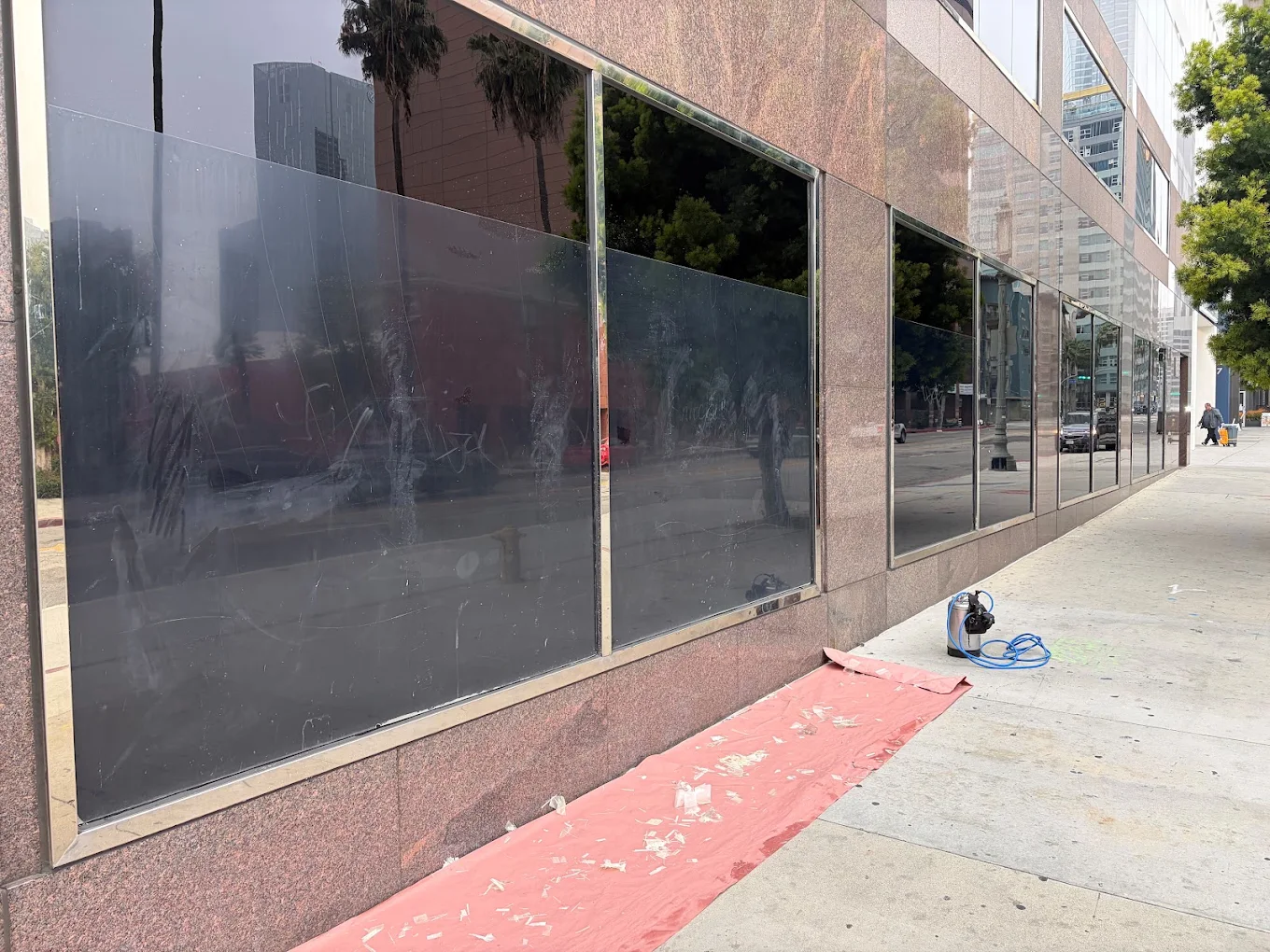
Office parks in Perimeter Center, along Windward Parkway in Alpharetta, in Peachtree Corners and in the Cumberland area tend to be three- to twelve-story buildings with long ribbon windows and surface parking all around. The lots throw heat and glare back up at the glass, and with few neighboring buildings for shade, every elevation takes sun at some point in the day.
These buildings often have one owner or a single property manager, which simplifies approvals. Many also have older single-pane or first-generation insulated glass that responds well to film. Phasing by floor or by elevation keeps the work out of tenants' way, and we can start with the hottest side to show results before committing the whole building.
- Ribbon-window office buildings
- Single-tenant corporate campuses
- Medical office buildings near hospital clusters
- Flex and R&D buildings with office fronts
Glare Control for Atlanta Open-Plan Offices
Open plans put more people near the glass and fewer behind walls, so glare affects more of the staff. Low morning sun on the east and late sun on the west wash out monitors, and the default response is to lower every blind on that side, which defeats the point of a floor designed around daylight and views.
A film that trims visible light moderately lets blinds stay open for most of the day. A boardroom with a wall-mounted display facing a west window is a harder case, and sometimes the honest answer there is film plus a roller shade. Our habit is to stick swatches up at the exact hour people complain, then let the tenant and the facilities team look at the screen through each one.
Scheduling Office Film Around Atlanta Tenants
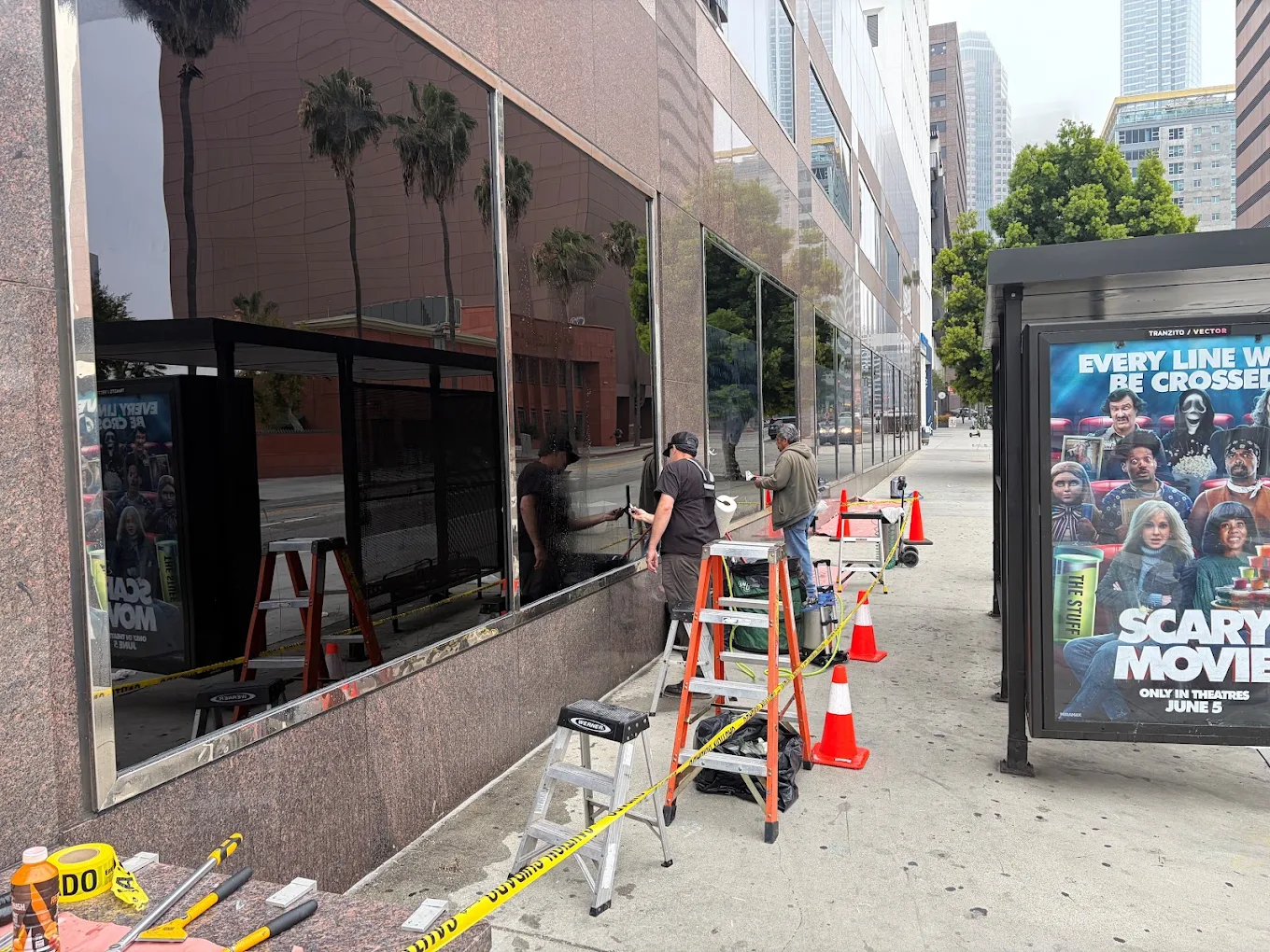
Office installs happen after hours, on weekends or during tenant improvement build-outs before move-in. We coordinate freight elevators and dock times with building management, carry the certificate of insurance the property requires, and leave each suite clean before staff arrive. Desks within a few feet of the glass need to be cleared, and we can work with the tenant's mover if furniture has to shift.
Large jobs are phased so only one floor or section is affected at a time. A punch walk with the property manager at the end of each phase catches anything that needs a touch-up.
What Office Window Film Changes for Atlanta Tenants and Owners
Fewer Hot and Cold Calls From the Office Perimeter
With less solar heat entering on the sunny side, perimeter zones stay closer to setpoint and facility teams spend less time chasing comfort complaints from the same few offices every afternoon.
Readable Monitors Near the Office Windows
Moderate glare film keeps screens usable with blinds open, so the desks nearest the glass are no longer the ones everyone avoids. Daylight and views stay part of the workspace.
Solar Film Lowers Peak Cooling Load on Sunny Elevations
Cutting solar gain where it is strongest trims the afternoon peak that perimeter HVAC equipment has to meet. Older rooftop units and chillers get a little breathing room on the worst days of an Atlanta July.
UV Protection for Office Finishes and Furniture
Because the film screens out close to all UV, carpet tiles, wood veneers, upholstery and reception finishes, so tenant improvements hold their look between refreshes.
Atlanta Office Window Film Questions From Facility Teams
Does our landlord have to approve office window film?
In most multi-tenant Atlanta buildings, yes. Leases usually restrict changes to the glass and the exterior look. Property management gets a product data packet and a swatch from us, and the chief engineer usually signs off on the glass compatibility.
Can film go on while our office is occupied?
Technically yes. In practice most tenants pick a Friday night or a Saturday, because the crew needs a clear strip in front of every window and nobody wants to pack up a desk mid-afternoon.
Is there a risk of cracking insulated curtain-wall glass?
Low, provided the film suits the glass. Our crew reads the glazing makeup off the shop drawings or the spacer markings and checks compatibility with the film manufacturer's guidance before proposing a product, especially on large insulated units.
Where does office film fit with the city's benchmarking rules?
Benchmarking is a reporting duty, so film is never required by it. Film lowers cooling energy at the perimeter, which can show up in benchmarking data over time. We supply product performance data for your consultant.
What lifespan should a facilities budget assume for office film?
Film on the room side of office glass is protected from rain and pollen, so it tends to stay clear and intact for a long time; the written warranty from the maker states the term. Outside-mounted grades wear faster.
Window film quote
Office Window Film Proposals for Atlanta Buildings
Tell us the building, which floors and faces get too hot, and attach elevations or a glazing schedule if you have them. A written scope with film options comes back by email.
Prefer email? info@windowfilmatlanta.pro