
Commercial heat-rejection film
Atlanta Solar Control Window Film for Curtain Walls and Ribbon Windows
On a commercial building, sunny glass is often the largest single driver of perimeter cooling load. Solar control window film reduces the heat and glare entering through that glass, on buildings from Downtown towers to Kennesaw warehouses.
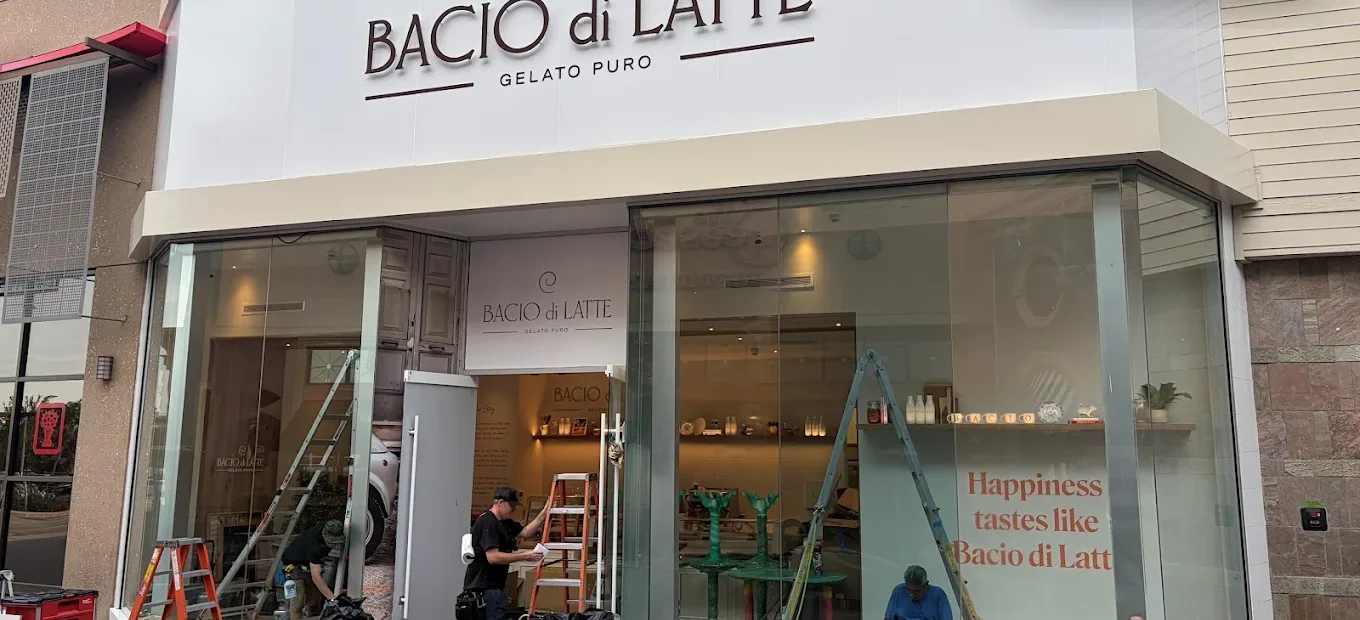 Atlanta
How Solar Control Film Works on Atlanta Commercial Glass
Solar control films lower the share of the sun's energy passing through the glass, measured as the solar heat gain coefficient. Some reflect energy with metallized layers, some absorb it with dyes or ceramics, and spectrally selective films target infrared while passing most visible light. Each type changes how the building looks and how much the interior brightness drops.
For a commercial building, the right choice balances heat rejection, daylight, glare control, exterior appearance and compatibility with the existing glass. We use the published performance data for each film to compare options, and we bring physical samples so owners and tenants can see the difference on their own glass.
Solar Film for Older Atlanta Office Buildings
Many Atlanta office buildings built from the 1960s through the 1990s have single-pane or early insulated glass, often bronze or gray tinted, with little solar control by modern standards. These buildings, common Downtown, along parts of Peachtree in Buckhead and in older suburban office parks, usually see the largest improvement from film.
Adding solar control film to that glass reduces perimeter cooling load and glare without replacing the curtain wall, which is a major capital project. For owners weighing a full reglazing against other priorities, film is a practical interim step that can stay in service for many years.
Thermal Stress Checks on Insulated and Tinted Glass
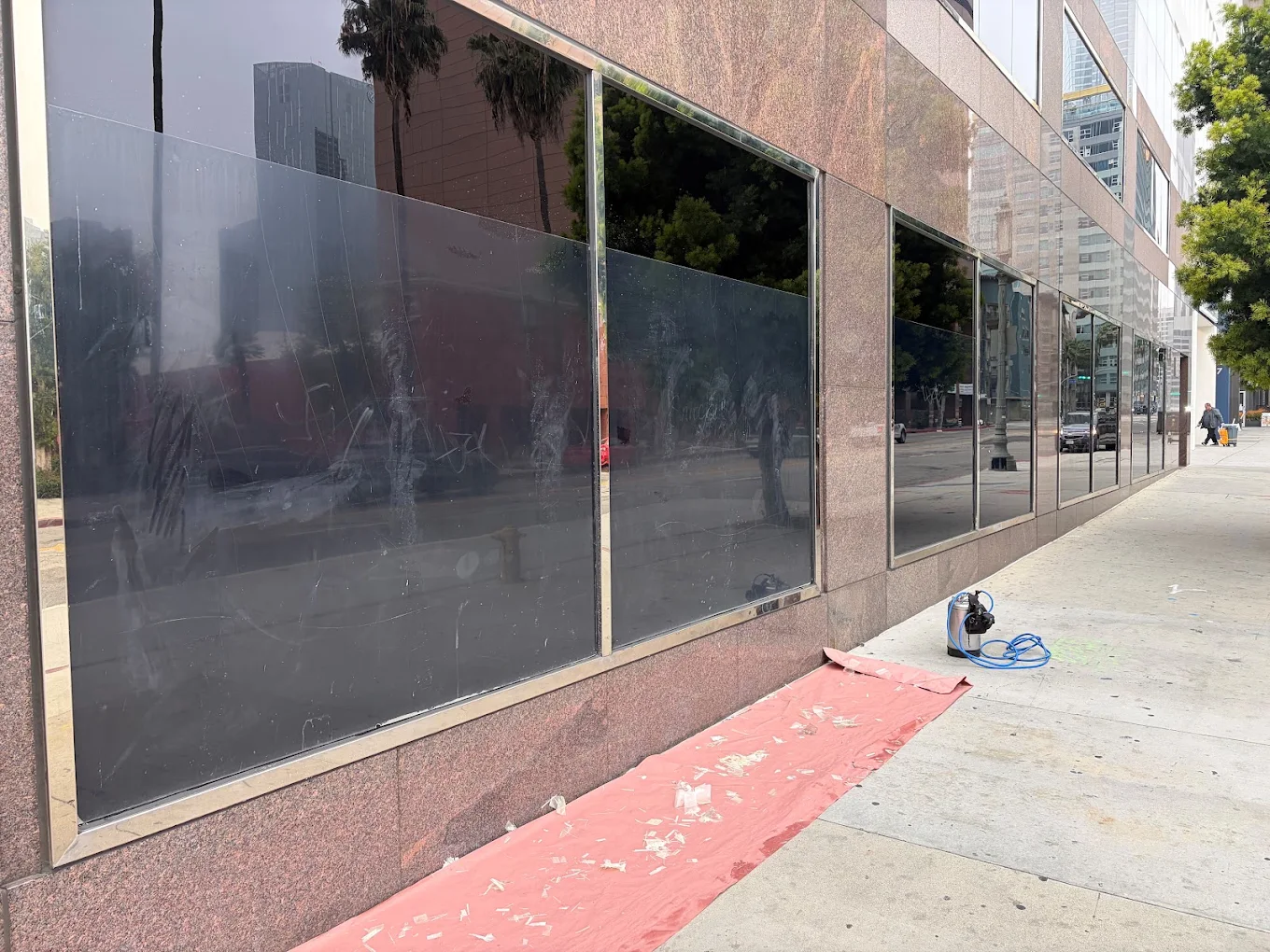
Film absorbs some solar energy, which raises the temperature of the glass. On certain insulated units, heat-strengthened panes or heavily tinted glass, the wrong film can increase thermal stress at the edges where the glass is shaded by the frame. That can lead to cracking.
We avoid that by identifying the glass makeup, checking for existing coatings, and consulting the film manufacturer's compatibility guidance before recommending a product. On large curtain-wall jobs, we review the glazing details with the building engineer and, where needed, the manufacturer's technical team. If a film is not suited to the glass, we say so.
- Glass type and thickness
- Existing tint or low-E coatings
- Frame shading and edge conditions
- Building orientation and exposure
Solar Control Film for Warehouses, Schools and Converted Lofts
Hospitals and medical office buildings deserve their own mention. Patient rooms and waiting areas facing west in the Sandy Springs medical cluster or near Midtown hospitals can get uncomfortably bright and warm, and blinds are not always practical in clinical spaces. A clear-leaning solar film improves comfort while keeping the outward view that helps patients.
Solar film is not only for towers. Distribution and light industrial buildings along I-75 and I-85 often have office fronts with large storefront glass facing parking lots. Schools and churches have big classroom and sanctuary windows that heat up rooms in late spring and early fall. Converted industrial buildings in West Midtown and along the BeltLine have huge steel-framed windows that were never designed for air-conditioned offices.
Each of these has different constraints on appearance and budget. A converted loft may need a near-clear film to preserve the industrial look, while a warehouse office front can accept a darker film for maximum heat rejection.
Exterior Appearance and Approval for Solar Film
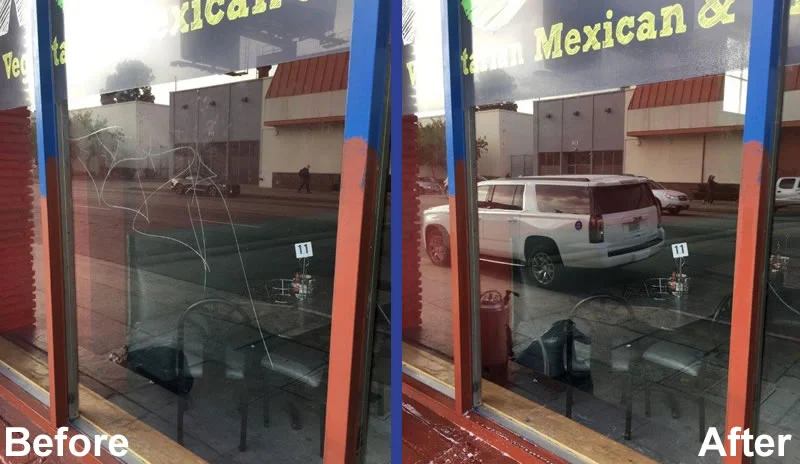
Reflective solar films change the building's appearance, sometimes dramatically. In multi-tenant buildings, the property manager usually requires approval, and some buildings already have a standard film. In historic districts, the city's design review may apply to visible changes. Low-reflectance and spectrally selective films minimize the exterior change.
We provide mockups on a few panes so owners and reviewers can see the effect before committing the whole building.
What Solar Control Window Film Does for Atlanta Buildings
Solar Film Cuts Perimeter Heat Gain
Reducing solar energy through sunny glass lowers the heat load in perimeter zones, which helps HVAC systems keep spaces closer to setpoint through long Atlanta summers.
Glare Reduction on Work Floors
Solar films reduce visible glare along with heat, so occupants can keep blinds open more often and work comfortably near the windows.
Window Film as an Alternative to Reglazing
Film improves the solar performance of existing glass without replacing curtain walls or windows, avoiding a major capital project and its disruption.
UV Protection for Building Interiors
Solar control films block nearly all ultraviolet light, slowing fading on finishes, furniture and merchandise throughout the building.
Building Owner Questions on Solar Control Film in Atlanta
Will solar film give our building a mirror finish?
That look comes only with the metallized grades. Low-reflectance and spectrally selective films reduce heat with little change to the building's appearance.
Can solar film crack our existing glass?
It can if the film is not suited to the glass. We check glass type, coatings and frame conditions against the manufacturer's guidance before recommending a product.
Is solar film installed inside or outside?
Usually inside, which protects the film and makes installation easier. Exterior films are used when interior access is limited or for specific performance reasons.
What service life should we plan for with solar film?
Interior-applied commercial film typically stays in service well over a decade, and the manufacturer's written warranty spells out the exact term. Exterior grades bake in full Georgia sun and rain, so plan on replacing those sooner.
Window film quote
Solar Control Film Proposals for Atlanta Buildings
Name the building, tell us which faces and floors overheat, and attach any curtain-wall shop drawings or glazing data. Our reply is a written scope listing two or three candidate films.
Prefer email? info@windowfilmatlanta.pro